Step 01
We come out and measure
On site, not over the phone. We look at grade, drainage, sun angle, the door threshold height and where the soil is doing something interesting. Usually an hour.
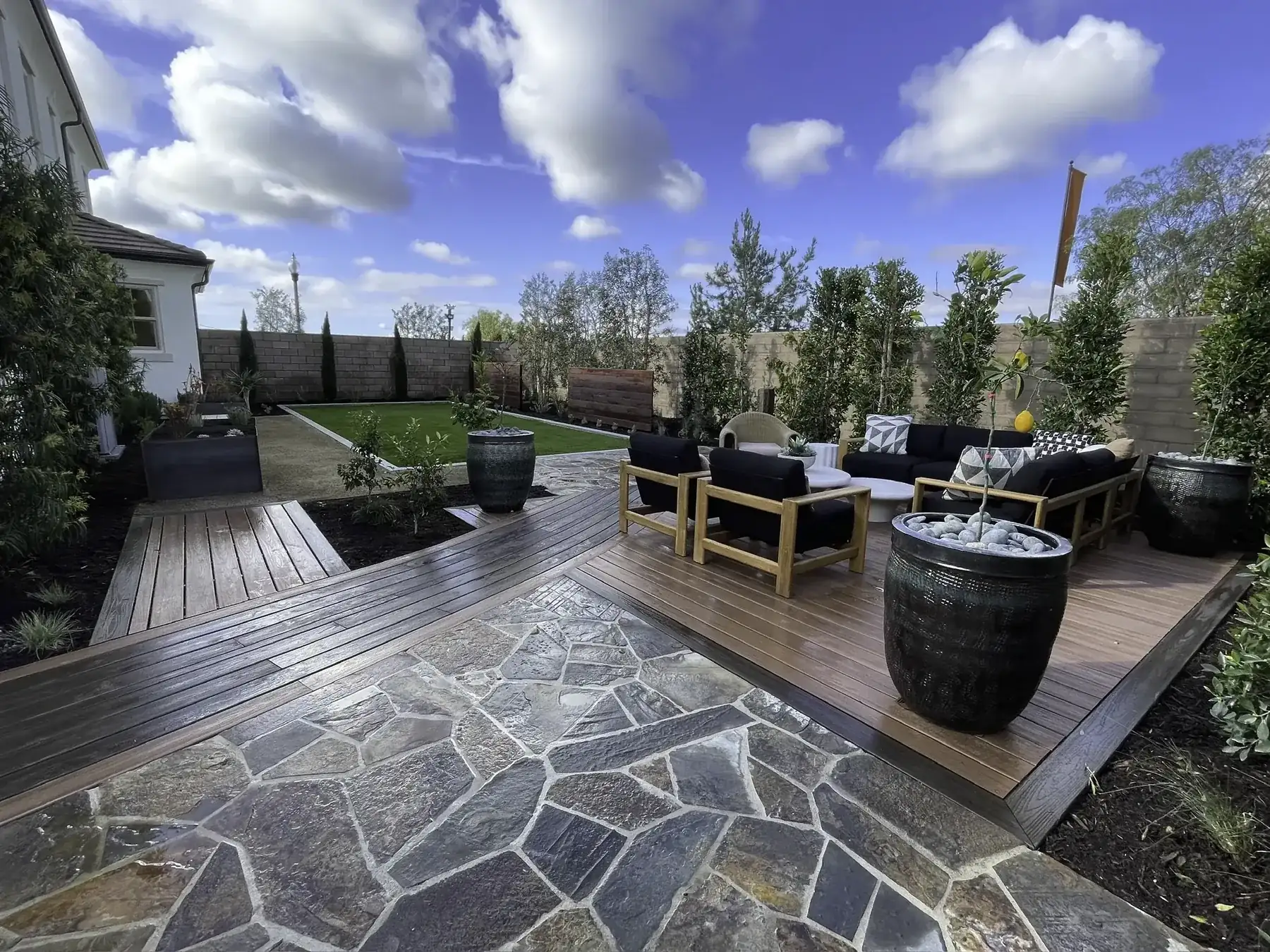
Built for clay that moves and summers that don't quit. A deck here has to survive soil that moves several inches a year and surfaces that hit skillet temperatures in July. We build for both, then make it beautiful.
Almost every failed deck we're called out to look at failed for one of two reasons, and neither of them is the wood.
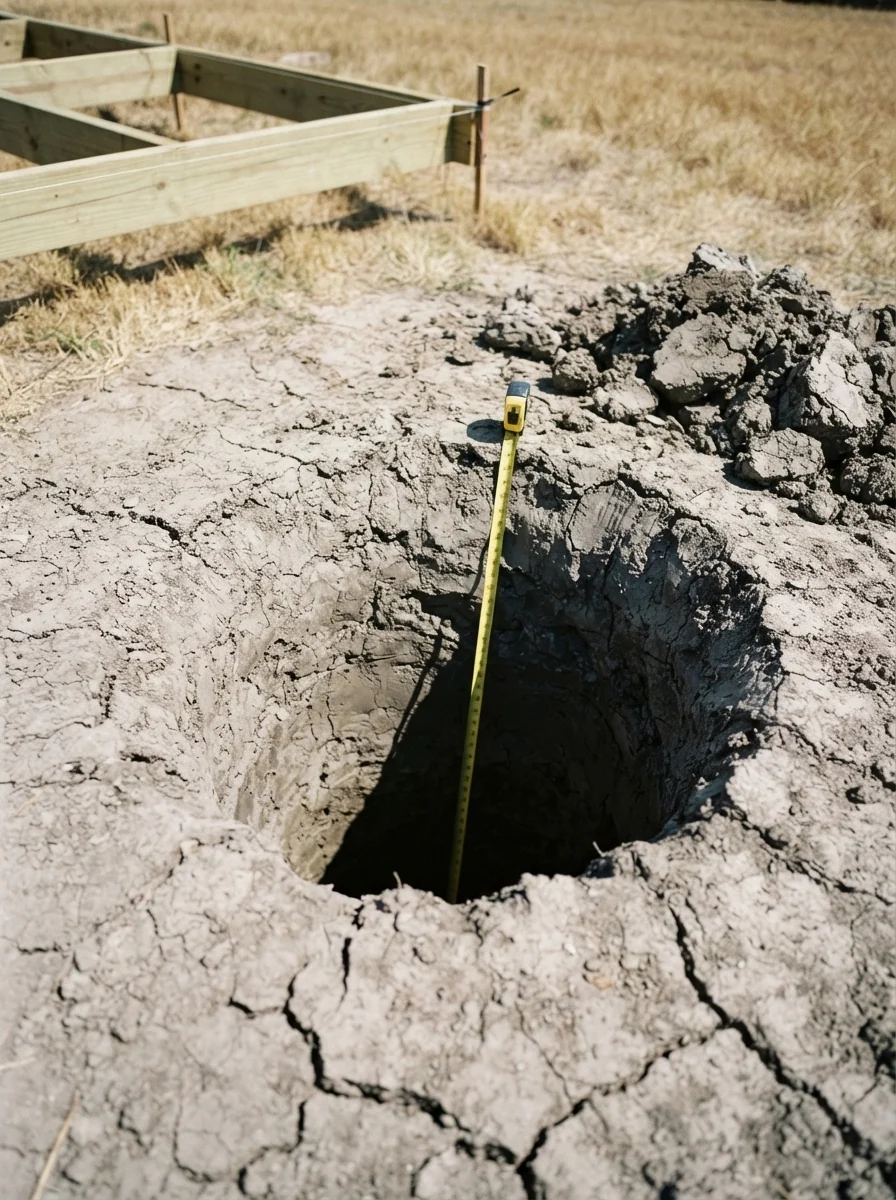
The first is underground. North Texas sits on Blackland Prairie clay. The USDA classes it as having very high shrink-swell potential, with 40 to 60 percent clay content that opens cracks up to four inches wide in a dry summer. A footing poured at a standard depth sits entirely inside the zone where that soil moves. It lifts in a wet spring and drops in August. After a few cycles the frame is racked and the boards have pulled.
The second is heat. Dallas–Fort Worth averages twenty days a year at or above 100°F. That's brutal on the wrong surface material. The difference between decking you can stand on barefoot in July and decking you can't is a material decision made months earlier, at the quote stage.
We size and embed footings for the soil we actually have, and we talk you through surface temperature before you pick a board. It is not the exciting part of the conversation. It is the part that decides whether you're happy in year ten.
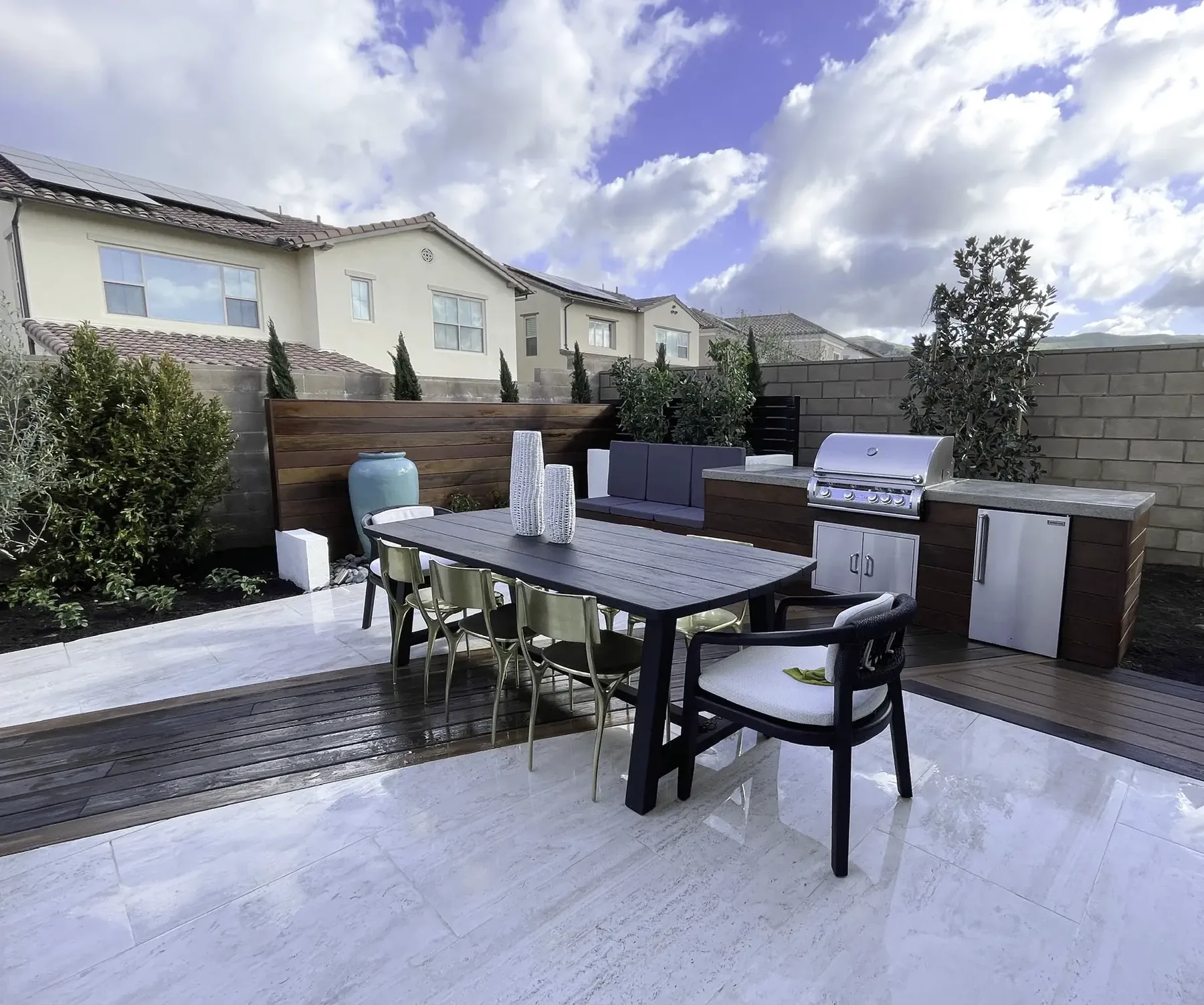
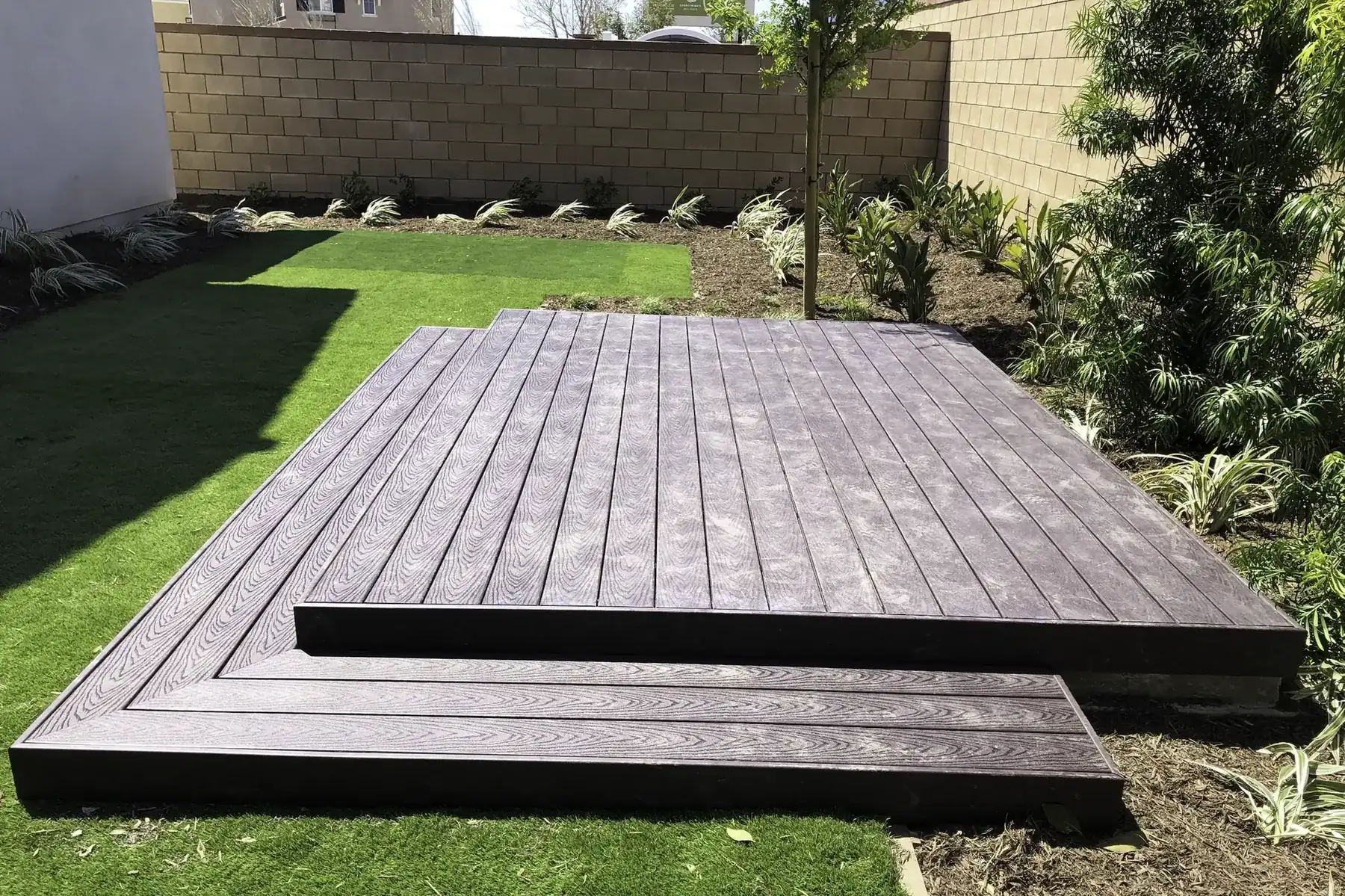
Low platforms that sit close to grade. They are the easiest way to add usable square footage, and in the City of Dallas, decks under 30 inches above grade are permit-exempt on single-family lots.
Elevated structures with engineered footings, proper lateral bracing and stairs that feel solid underfoot. Where a slope or a walkout basement makes a single plane wrong.
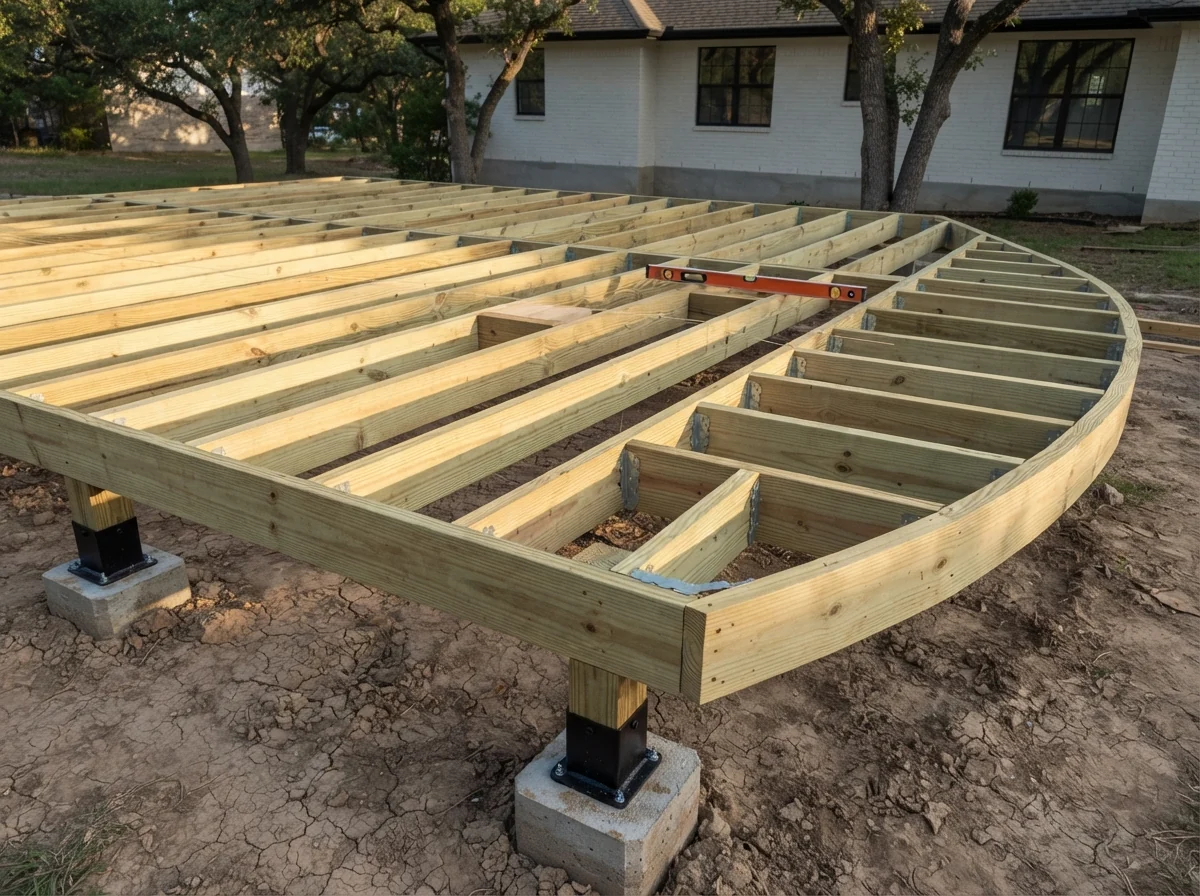
Curved edges, radius corners and sweeping stair treads. The framing is laid out to carry the arc and the boards are kerfed or laminated to follow it, which is the difference between a real curve and a faceted approximation of one.
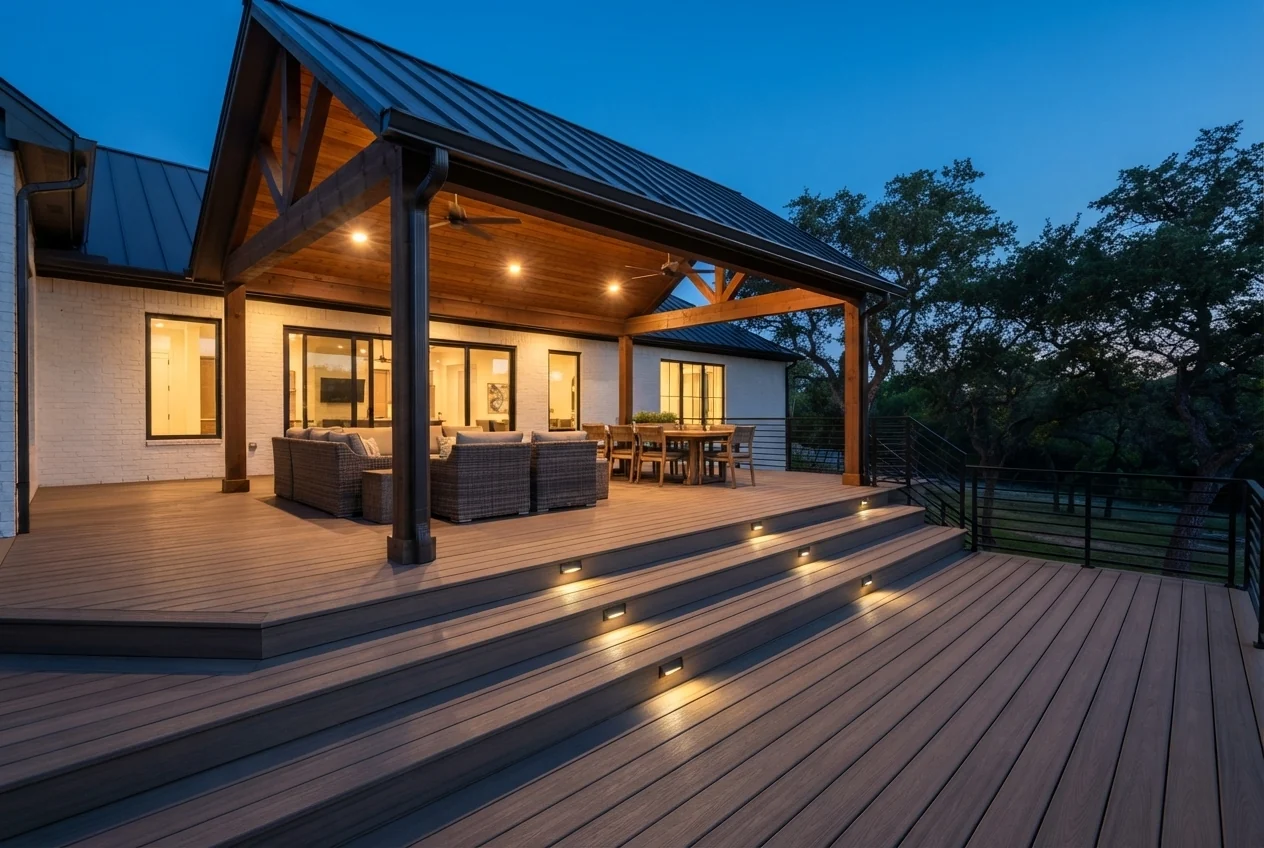
A deck you can use in August. The roof structure, fans, lighting and screens tie into the house line, so it reads as original.
Slip-resistant surfaces, cool-touch material selection and the code-required barrier detailing handled as part of the build, not as an afterthought.
Re-decking over a sound frame, or re-footing a structure that has moved. We'll tell you honestly which one you're looking at.
The kinds of structure this page describes, and the detail that goes into them.
There is no single right answer. There is a right answer for your budget, your sun exposure and how much Saturday maintenance you actually want.
| Material | What to know | Relative cost |
|---|---|---|
| Western red cedar | Warm, natural, and the classic North Texas choice. It stays noticeably cooler underfoot than composite, and needs cleaning and re-sealing on a cycle to hold its color. | Mid |
| Ipe and hardwoods | Extremely dense, extremely durable, and stunning. It is the premium option, and heavy to work with, which is reflected in the labor. | High |
| Capped composite | No sealing, no splinters, long warranties. It gets hotter than wood in direct sun. Some newer lines are engineered to run cooler, and we'll show you the difference on a sample in the sun before you commit. | Mid–High |
| Pressure-treated pine | The value option. Done well, with proper fastening and a real finishing schedule, it performs. Done cheaply, it cups and checks within two summers. | Entry |
Relative cost compares options against each other, not against a fixed price. Your quote gives real numbers for your project, with each option priced side by side.
We are a licensed and insured custom decks and patios contractor working out of Mineral Wells and across the corridor east into the Dallas–Fort Worth metroplex. The person who quotes your project is the person who runs it.
What separates the work is what happens before the pretty part: footings sized for the soil on your lot, permits pulled by us rather than handed back to you, and a fixed price that does not move once the job starts.
We work out of Mineral Wells and cover the corridor east through Weatherford and Fort Worth into the Dallas–Fort Worth metroplex, plus the lakes across North Texas.
Not always. The City of Dallas exempts decks and platforms not more than 30 inches above grade on single-family and duplex lots. Above that, or if you're adding a roof structure, you need one. Fort Worth is far stricter. A permit is required for decks over six inches above grade. Because the rules differ this much between neighboring cities, we confirm your specific address before quoting, and we pull the permit as part of the job.
It depends far more on structure than on square footage. Height, footing requirements, stairs, railing and whether it's covered move the number much more than size does. We give you a fixed quote after seeing the site, with the material options priced side by side so you can see exactly what each upgrade costs.
Natural wood, particularly cedar, generally runs cooler underfoot than composite in direct sun. Lighter colors help in every material. Some composite lines are now specifically engineered to reduce heat build-up — Trex, for example, claims up to a 35°F reduction versus their original boards for certain products. We bring samples out and let you feel the difference in real sun before you decide.
Most residential decks run one to three weeks on site once we start, depending on size and whether there's a roof structure. Permitting and HOA approval happen before that, and they are the less predictable part. We'll give you a realistic date range up front, not an optimistic one.
Yes, and it is some of the work we most enjoy. A curve is a framing problem before it is a decking problem — the joists and blocking have to be laid out to the arc so the boards have something to land on every few inches. Decking is then kerfed on the underside or laminated to follow the radius. It costs more than a rectangle because of the layout and the waste, and it is what makes a deck look designed rather than assembled.
Often, yes, and it can be an excellent option. It avoids disturbing soil and can be quicker. It depends on the slab's condition, drainage and the height you'd end up at relative to your door threshold. We'll assess it on the visit.
A deposit reserves your build slot and covers material ordering. The amount is set out in your written quote before you sign anything, and we never ask for the full amount up front. The balance is tied to progress on the job.
Our carpentry crews are in-house. Where a trade licence is legally required, such as electrical or gas for an outdoor kitchen or a dock, that work goes to a licensed specialist we coordinate and stand behind.
It depends on the material. Cedar wants cleaning and re-sealing on a cycle to hold its color against our sun; composite wants washing and little else. We leave you a maintenance schedule written for the exact material you chose, not a generic sheet.
Yes. A written workmanship warranty on top of whatever the material manufacturer provides. Details are in your quote so you can read them before you sign anything.
Tell us what you're picturing. We'll come measure, talk through materials, and put a real number on it. No charge, no pressure.
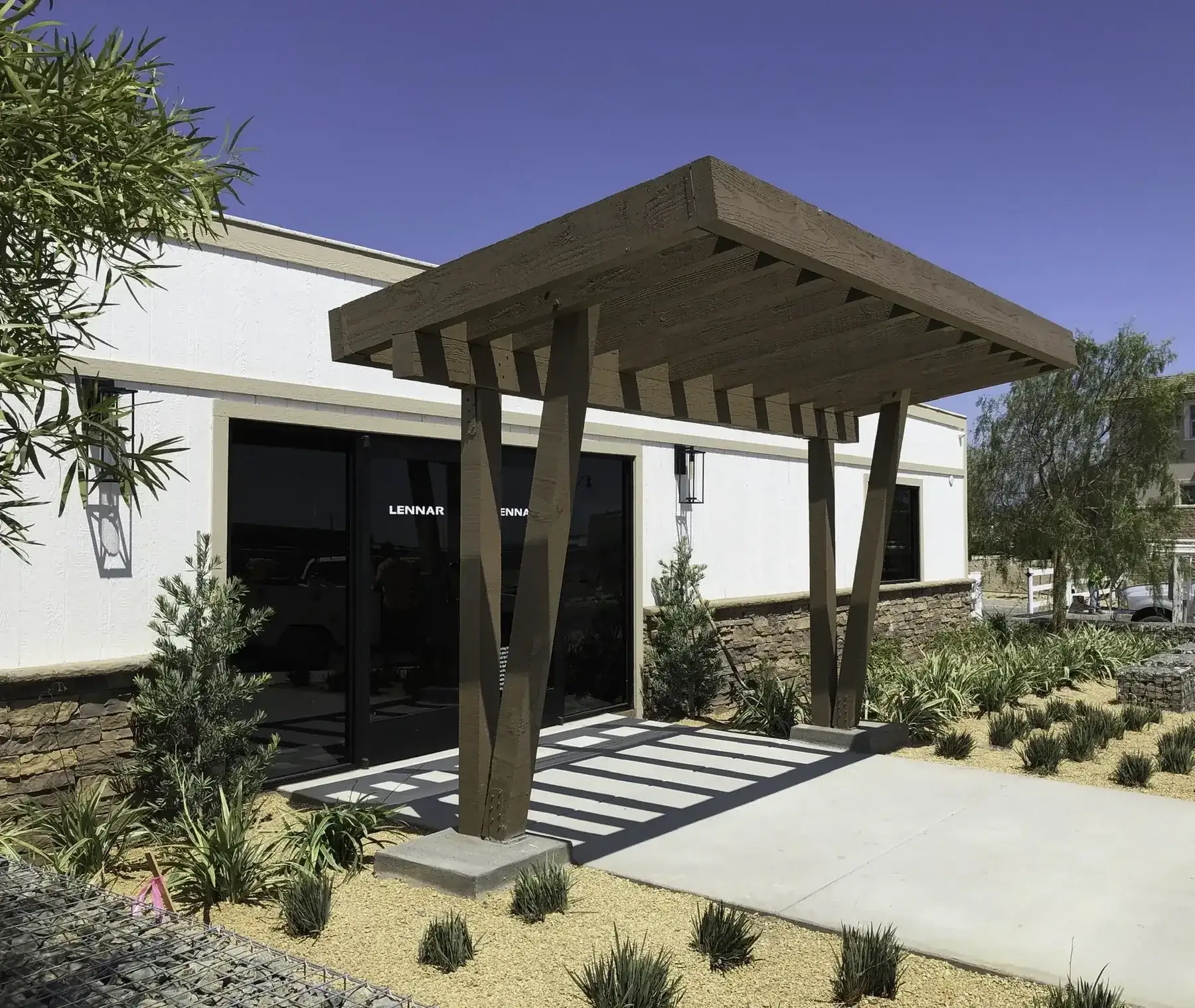
Heavy timber frames, long-span pavilions, entry structures and heritage barn framing.
Explore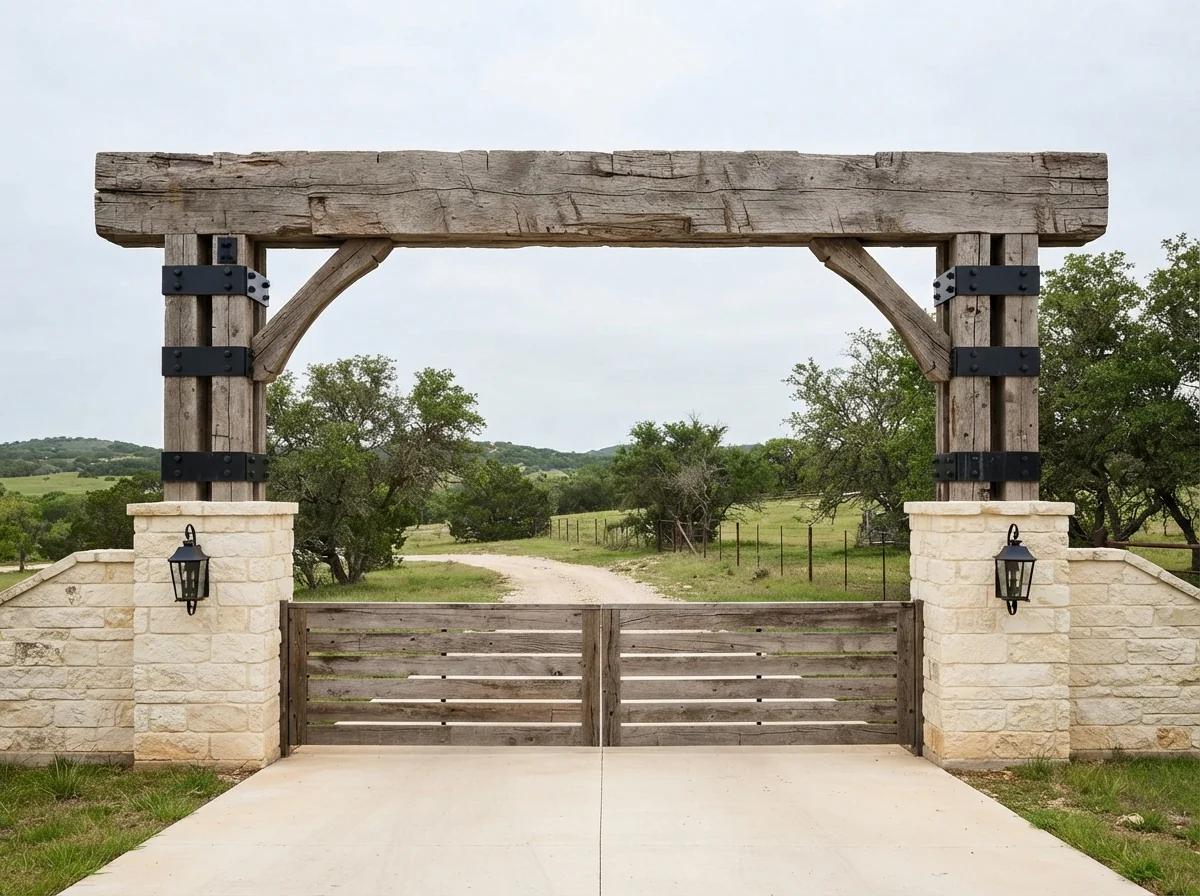
Ranch entrances, gated drives and development entries in heavy timber, built not to sag.
Explore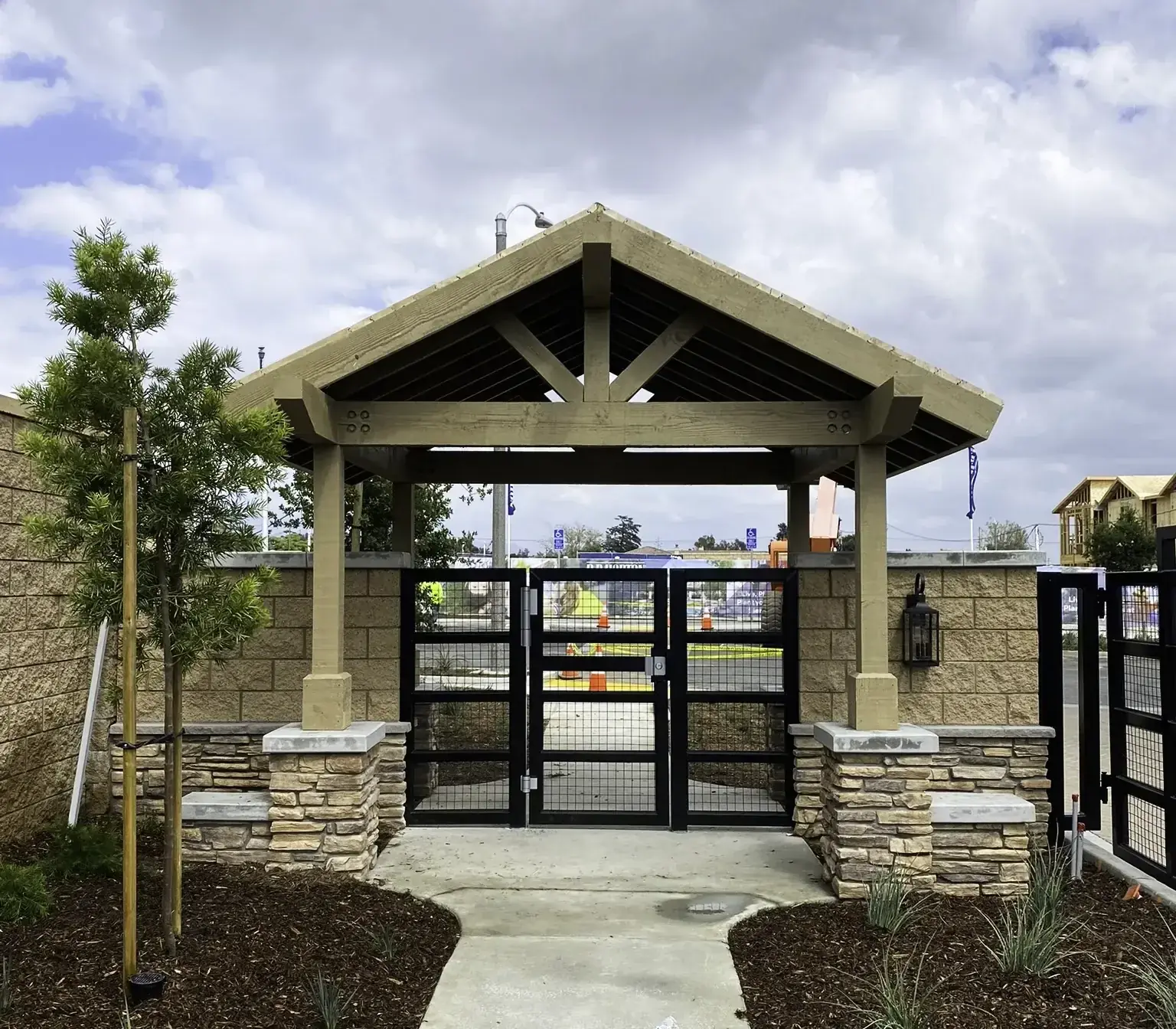
Heavy timber pavilions, cedar pergolas, attached covers and tongue-and-groove ceilings.
Explore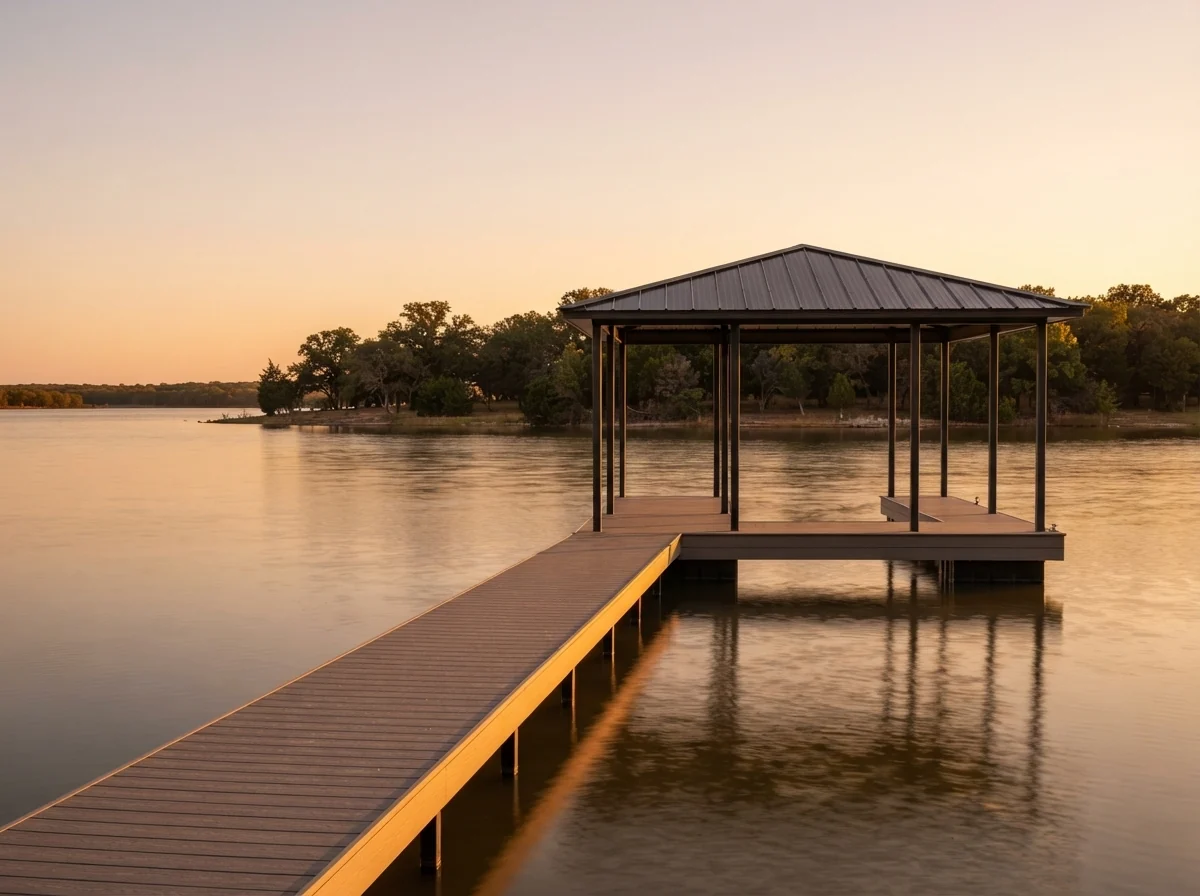
Re-decking, structural repair, storm damage and permit transfers on docks of all types.
Explore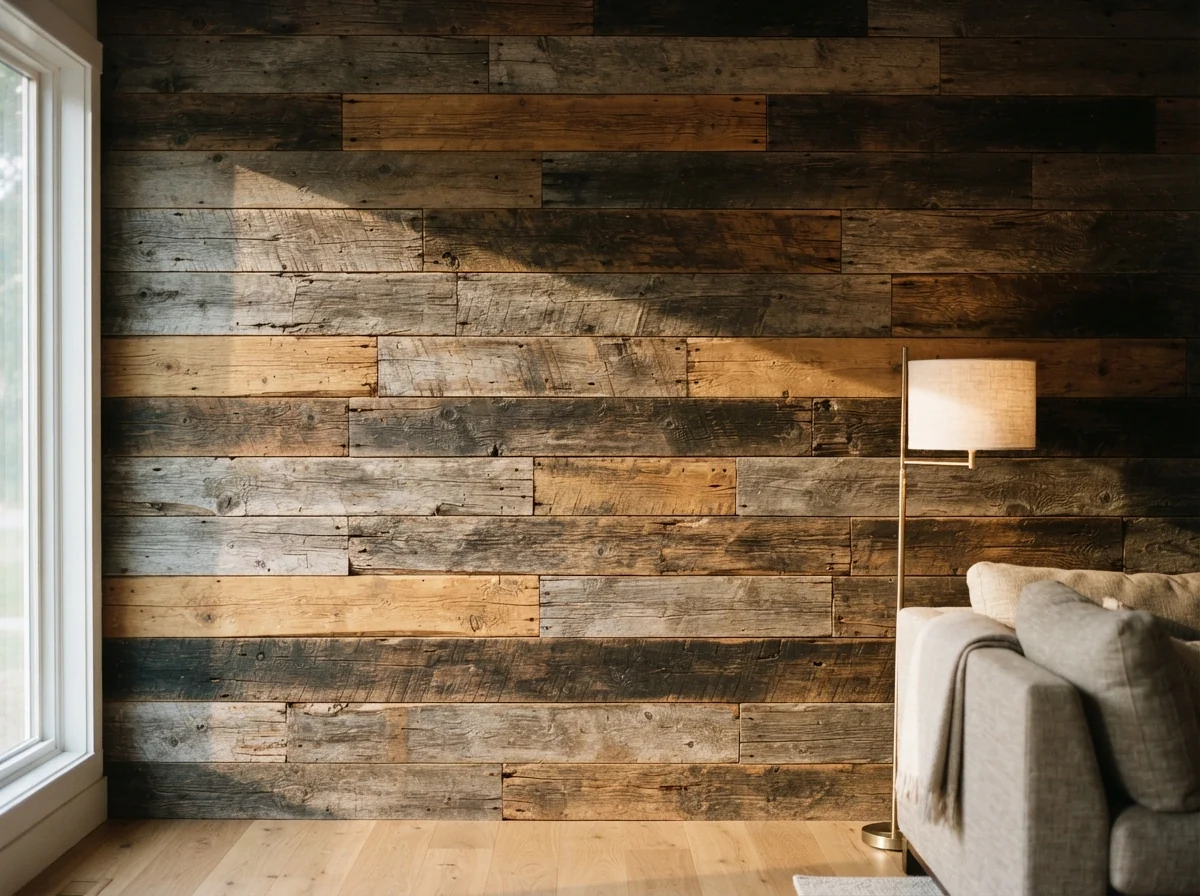
Accent walls, ceilings, beams, mantels and doors in salvaged timber — or new beams aged to match.
Explore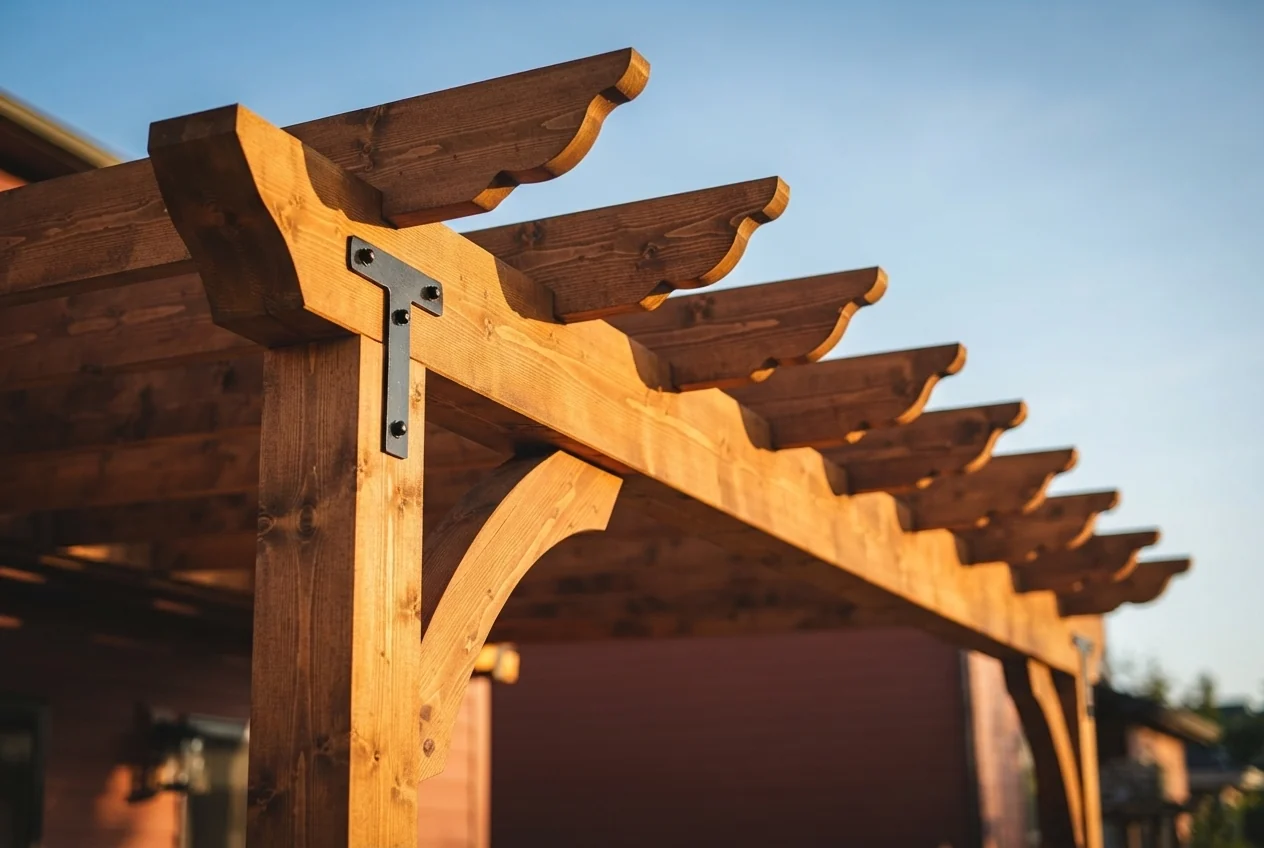
Hand cut corbels, knee braces and custom box beams for homeowners, contractors and lumberyards.
Explore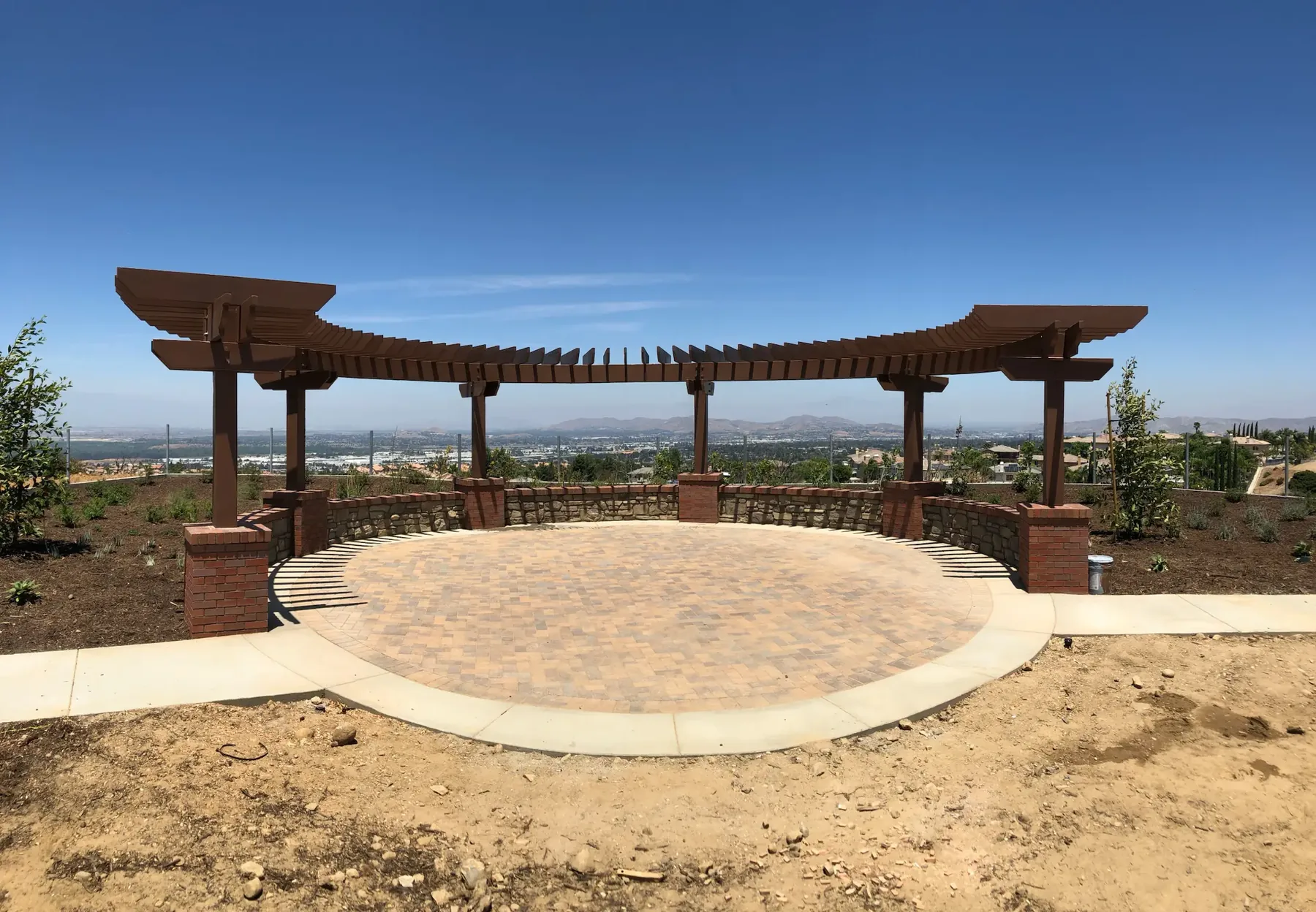
A site visit, a scaled drawing and a fixed quote, at no cost and with nobody chasing you afterwards.